
Poolside Dining
Are We Using The Pool At The Wrong Time Of Day?
Adam O’Connor & Ian Croft | Tricon Foodservice Consultants
It sounds like a straightforward assumption: people use the pool during the day, so that is when poolside food and beverage should operate.
In many hotels, that still means a familiar pattern. Open in the late morning, serve drinks and casual food through the afternoon, then wind down around sunset.
But that operating model does not work equally well everywhere.
In some of the world’s hottest destinations, the middle of the day can be precisely when guests are least likely to want to sit outside. In other markets, pool use may be strong during the day but the opportunity to continue into drinks and dinner is being missed.
The question is:
WHEN DO GUESTS ACTUALLYWANT TO USE THE POOL?
THE POOL DOESN’T HAVE ONE DAYPART
Climate, culture and location have a significant impact on when a poolside operation can perform.
In the Middle East, extreme summer temperatures can make evening and night-time use more attractive than midday. Night swimming and evening pool experiences are already being used by luxury hotels to extend the operating day.
In Southern Europe, opportunities are different. Poolside lunch can move naturally into afternoon drinks, aperitivo and dinner.
Tropical Asian markets such as Singapore, Bangkok and Hong Kong have heat and humidity but also frequent heavy rainfall. Here, shade, airflow, and covered areas can be as important as opening hours.
Australia, North America and the Caribbean present different patterns again.
The right poolside daypart is determined by the market, not by a standard hotel operating model.
| Middle East | Sunset → Late Night | The opportunity may be to make sunset the start of the pool’s main F&B period rather than the end. |
|---|---|---|
| Mediterranean / Southern Europe |
Lunch → Late Evening | Daytime pool activity can continue into aperitivo and dinner. |
| Singapore / Bangkok / Hong Kong |
Late Morning → Evening | Weather can interrupt the day. Shade, airflow and covered capacity can extend usable trading periods. |
| Australia | Late Morning → Sunset | Early evening and the spring and autumn shoulder seasons may provide additional opportunities. |
| Caribbean / Tropical Resorts |
Mid-Morning → Sunset | The opportunity is to retain guests through sunset with food and drinks rather than automatically losing them to another venue. |
| Urban Hotels | Lunch → Late Evening | After dark, the poolside venue may have the potential to attract local customers as well as hotel guests. |
THE OPPORTUNITY ISN’T NECESSARILY LONGER HOURS. IT’S IDENTIFYING THE RIGHT HOURS.
DESIGN FOR THE OPERATION YOU WANT
Changing the daypart changes the design requirements.
At 2pm, a guest may be barefoot, wet and eating from a sun lounger.
At 8pm, another customer may have specifically chosen the venue for dinner.
These require different seating, lighting, service, and atmosphere.
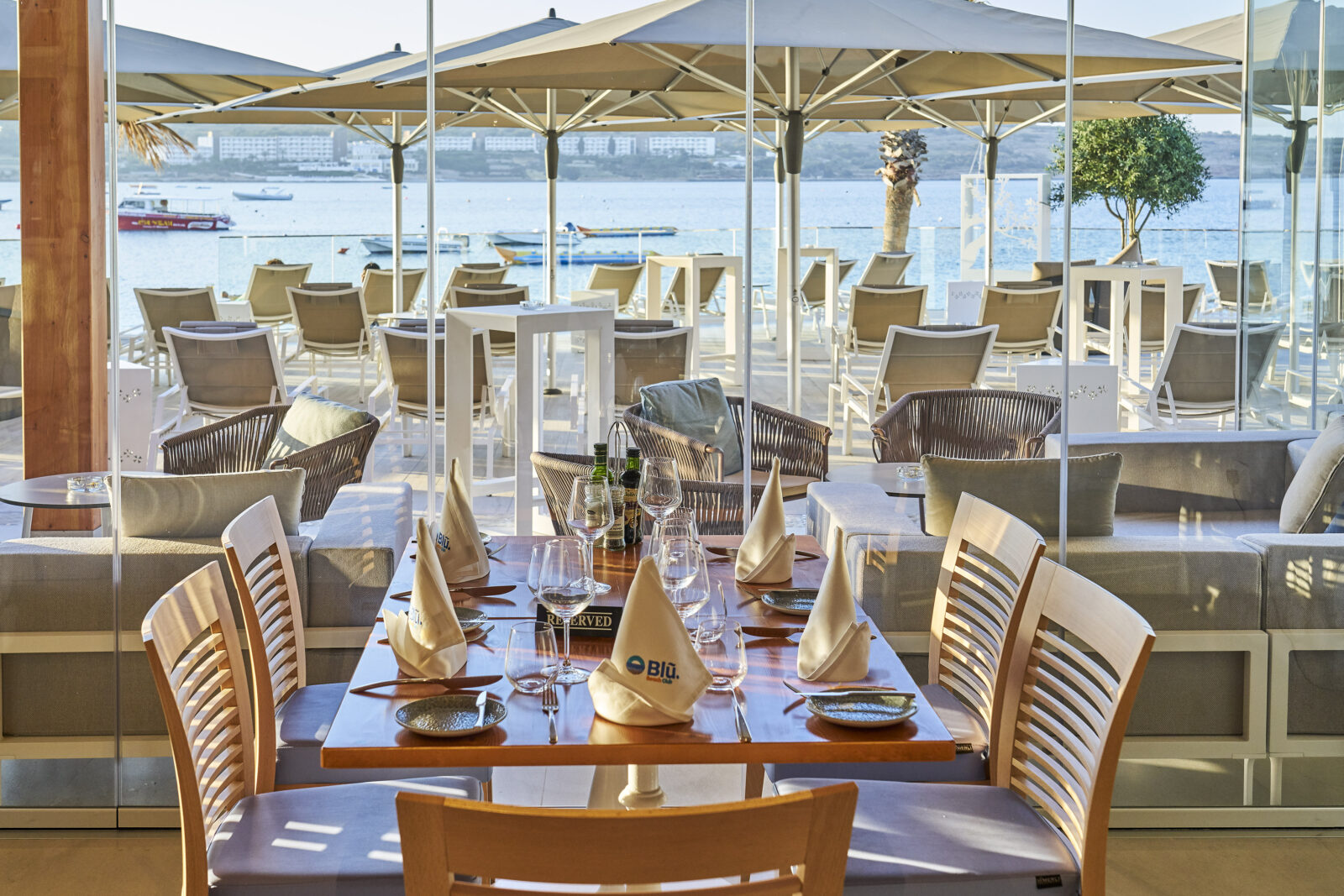
Pool environments may therefore need separate areas for swimming, lounging, families, drinking and dining rather than expecting one space to perform every function.
This becomes particularly important if the poolside operation is intended to attract customers who are not staying at the hotel.
Hotel amenities and destination restaurants are not necessarily the same thing.
THE MENU DETERMINES THE KITCHEN
A pantry capable of producing drinks, salads and sandwiches is entirely appropriate for daytime pool service.
It may not support dinner.
That doesn’t mean every pool requires a standalone kitchen.
A satellite or finishing kitchen supported by the hotel’s main production kitchen can often provide the right solution.
Before deciding what is required poolside, we need to understand:
- What is produced centrally
- What needs to be finished locally
- How far food needs to travel
- Refrigeration and holding requirements
- Warewashing
- Whether cooking or extraction is required
The operation should determine the equipment. Not the words “pool bar” on the plan.
DISTANCE IS PART OF THE DESIGN
The kitchen visible from the restaurant may not be the kitchen producing its food.
Pool service can involve food traveling through corridors, lifts, guest areas, and external routes before reaching
the customer.
That affects food quality and labour.
The return journey matters too. Crockery, glassware and waste all need to move back without conflicting unnecessarily with guests or clean food flows.
A pool located at a significant distance from the main kitchen may therefore require more local support than one directly connected to food production.
Sometimes the answer isn’t a larger pool kitchen.
It’s a better food production and distribution strategy across the hotel.
CLIMATE ISN’T JUST ABOUT COMFORT
Outdoor foodservices have to deal with more than temperature.
Sun, humidity, rain, wind, salt and chlorine can all affect the operation.
They influence shade requirements, refrigeration performance, equipment specification, drainage, materials and maintenance.
Weather protection can also determine whether the venue continues trading when conditions change.
This is particularly important in tropical markets where a heavy downpour can quickly remove most or all outdoor seating.
The design needs to consider not just the average weather.
It needs to consider what happens when the weather isn’t average.
AFTER DARK CHANGES THE BRIEF
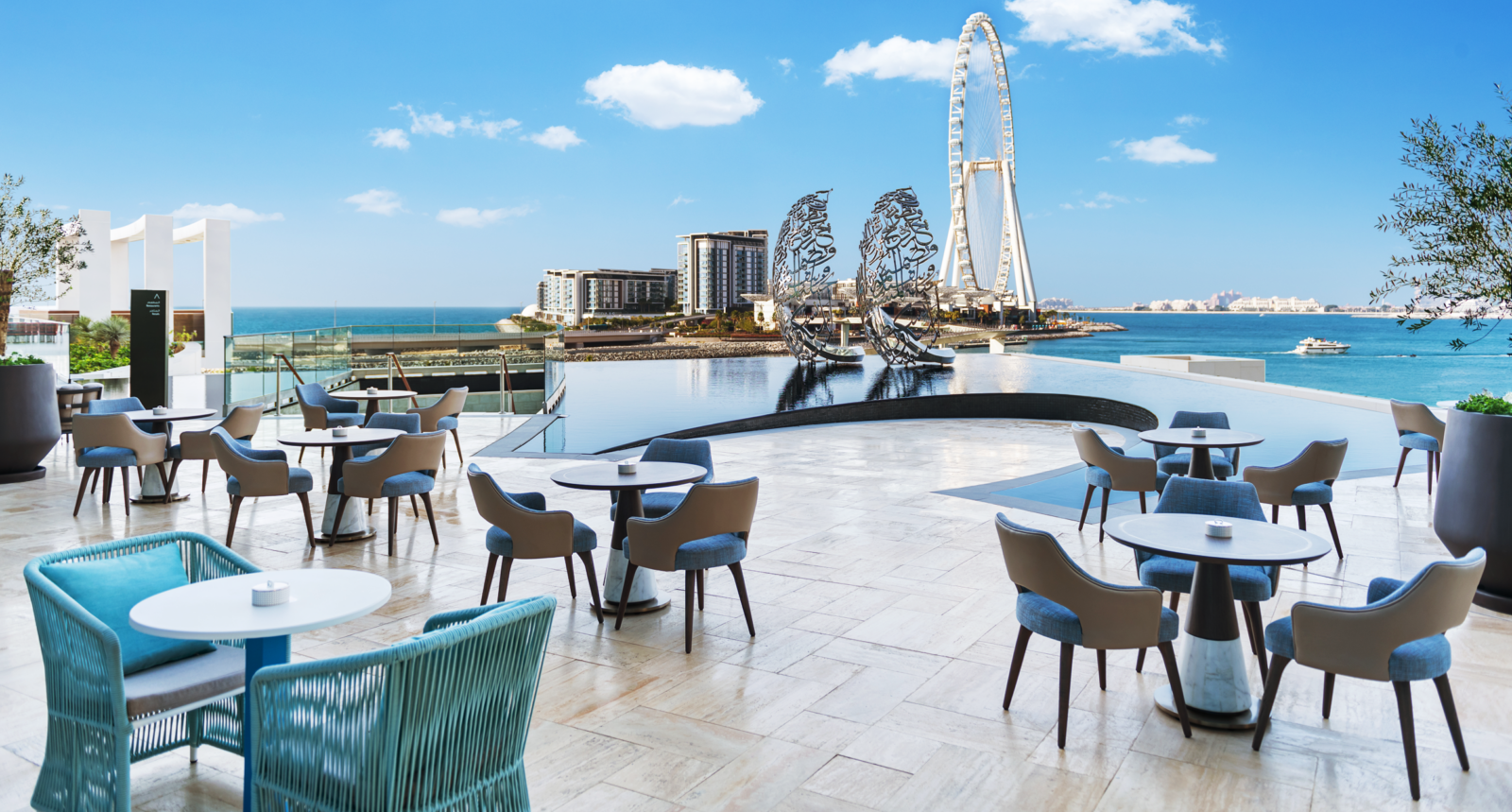
Extending pool operations into the evening introduces other considerations.
Lighting becomes part of the hospitality experience.
Music and entertainment introduce acoustic issues.
Wet swimmers and restaurant customers may need greater separation.
And guestrooms may be directly above or adjacent to the pool.
The objective is therefore not simply to keep the pool open for longer.
It is to make those additional hours commercially useful without compromising the rest of the hotel.
SO, WHAT SHOULD A POOLSIDE F&B OPERATION DO?
There is no universal model.
A small daytime pool may need little more than beverage service and a well-planned pantry.
A large resort pool may justify substantial satellite kitchen facilities.
An urban hotel may have the opportunity to turn its poolside environment into an evening F&B destination.
BEFORE DETERMINING THE SOLUTION, WE NEED TO UNDERSTAND:
- Climate
- Guest profile
- Dayparts
- Menu
- Pool capacity
-
Kitchen
connection -
Service
coordination -
Protection from
weather -
Evening
opportunities
Once those are understood, the foodservice requirement becomes much easier to establish.
It’s not what we put at the pool, rather, what the guests need and when they can actually use it.
GET THAT RIGHT FIRST, AND THE DESIGN FOLLOWS.
ABOUT THE AUTHORS

Adam O’Connor is Tricon’s Regional Director for Asia Pacific, with more than 30 years’ experience in foodservice. He specializes in hospitality and corporate foodservice strategy, with a particular focus on consumer behaviour, commercial models and translating an F&B vision into a workable project brief.

Ian Croft is one of the world’s leading foodservice and F&B designers with more than 35 years’ experience across luxury hospitality, five-star hotels, destination restaurants and major cultural projects worldwide. He is known for combining technical expertise with a strong understanding of hospitality operations, design, helping turn ambitious concepts into practical, commercially effective F&B environments. Making him a trusted advisor among developers, operators, architects, interior designers and culinary teams internationally.